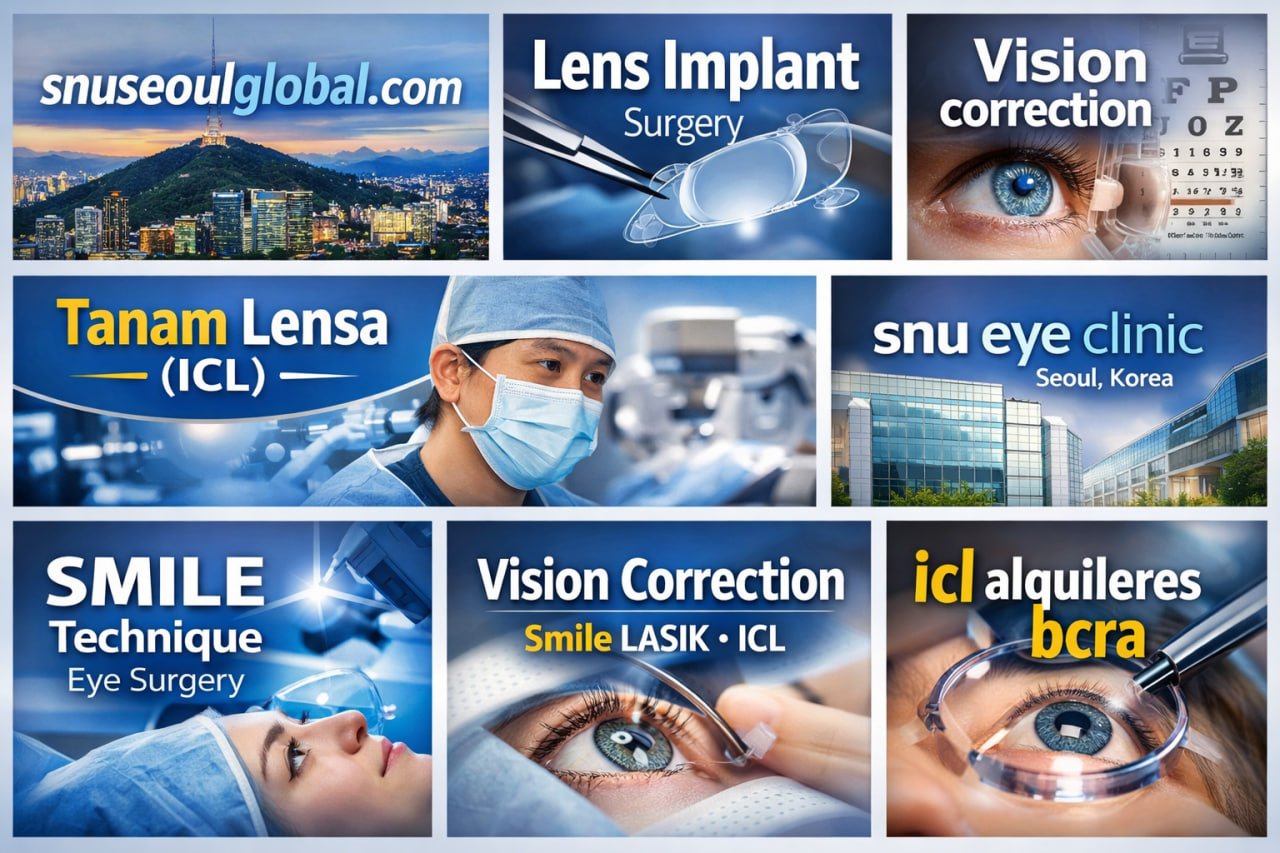
Clear vision is essential for daily life, yet millions of people worldwide struggle with refractive errors that affect their ability to see clearly. Modern medical advancements have introduced a wide range of vision correction procedures designed to provide long-term solutions. Among the most innovative methods is SMILE technique eye surgery, a minimally invasive procedure that has become increasingly popular for treating myopia and astigmatism. At SNU Eye Clinic in Seoul, this advanced technique is combined with icl biotech innovation and university-level ophthalmology expertise, helping patients achieve precise and reliable vision correction.
The clinic’s international platform provides patients access to detailed medical information and consultation through https://snuseoulglobal.com, making it easier for people from around the world to explore advanced eye treatments available in South Korea.visit for more details 视力矫正.
The Science Behind SMILE Technique Eye Surgery
SMILE, also known as Small Incision Lenticule Extraction, represents a major evolution in refractive surgery. Unlike traditional LASIK procedures that require creating a corneal flap, SMILE uses a femtosecond laser to create a small lenticule inside the cornea. This tiny piece of tissue is removed through a micro-incision, reshaping the cornea and correcting the refractive error.
The procedure is often referred to as Smile lasik or pro smile technology because of its advanced laser systems and minimal disruption to the eye’s surface. The use of a smile pro machine ensures extremely precise laser application, reducing recovery time and minimizing complications.
Patients researching vision correction often encounter terms like 全飞秒 surgery, Смайл про, or Смайл ласик when learning about SMILE technology. These terms refer to the same laser-based technique that has become one of the most advanced solutions for myopia correction. At SNU Eye Clinic, the procedure is enhanced by icl biotech technology that supports accurate diagnostics and treatment planning.
Why Patients Choose SMILE LASIK for Vision Correction
One of the main advantages of SMILE technique eye surgery is its minimally invasive approach. Since the procedure involves only a tiny incision, the cornea remains structurally stronger compared with traditional LASIK surgery. This characteristic reduces the risk of dry eye symptoms and improves long-term stability.
Patients from different regions often research the procedure under various names. For example, in Korean discussions about refractive surgery, people may compare 라식 vs 라섹 디시 or read reviews like 하늘안과 라식 후기 before selecting the best treatment. International patients may explore resources discussing Лазерная коррекция зрения or Koreksi Penglihatan to understand how SMILE compares with other procedures.
The precision of SMILE surgery is further enhanced through digital imaging systems developed through icl biotech research. These systems analyze corneal thickness, curvature, and refractive error, allowing surgeons to customize each treatment for optimal visual results.
At SNU Eye Clinic, this combination of advanced diagnostics and surgical expertise helps ensure that patients achieve clear and stable vision with minimal discomfort.
Comparing SMILE with LASIK and LASEK Procedures
When patients consider refractive surgery, they often compare several procedures including LASIK, LASEK, and SMILE. Each method offers unique advantages depending on the patient’s eye condition and lifestyle.
LASIK remains one of the most widely known procedures for vision correction. It involves creating a corneal flap and reshaping the underlying tissue with a laser. While highly effective, LASIK may not be suitable for patients with thin corneas or certain eye conditions.
LASEK, also referred to as 라섹 or Ласек, is an alternative procedure that modifies the outer layer of the cornea rather than creating a flap. Some clinics around the world perform variations such as sst lasek or lasek bytkowski techniques to improve healing and visual outcomes.
SMILE surgery, however, provides a unique combination of precision and minimal invasiveness. Because it uses a small incision rather than a flap, the procedure preserves more of the cornea’s natural structure. This advantage makes it particularly attractive for patients with active lifestyles or those concerned about corneal stability.
While many people compare procedures available in different regions such as lasik eye surgery austin or lasik eye surgery texas, Korea has become internationally recognized for advanced ophthalmology centers like snuseoul that combine research, technology, and clinical experience.
Technology and Diagnostics Supporting SMILE Surgery
Successful refractive surgery begins with a detailed eye examination. At SNU Eye Clinic, diagnostic procedures involve advanced imaging and analysis to determine the most appropriate treatment for each patient.
Patients may undergo tests similar to 라식 검안 examinations used in Korea or ตรวจสายตา screenings commonly performed in international clinics. These evaluations measure corneal thickness, pupil response, retinal health, and other critical parameters.
The integration of icl biotech technology helps ophthalmologists interpret these measurements with exceptional accuracy. By combining digital imaging with surgical planning software, surgeons can design a personalized treatment plan that maximizes visual clarity while minimizing surgical risks.
In addition to SMILE surgery, the clinic also offers other advanced treatments including Lens Implantation and ICL procedures for patients who are not suitable candidates for laser surgery. This comprehensive approach ensures that every patient receives the most effective solution for their vision correction needs.
Patient Recovery and Postoperative Care
Recovery after SMILE technique eye surgery is typically quick and comfortable. Most patients notice significant visual improvement within a short period following the procedure. Because the surgery involves only a small incision, the cornea heals rapidly and discomfort is minimal.
During the healing process, patients are advised to follow postoperative care instructions carefully. These guidelines may include eye protection, temporary activity restrictions, and medication use to prevent infection or inflammation.
Many clinics provide postoperative recommendations similar to 스마일 라식 관리 instructions, emphasizing eye hygiene and avoiding excessive screen exposure during the initial recovery period. Regular follow-up appointments allow ophthalmologists to monitor healing and confirm that the patient’s vision continues to improve.
Individuals researching surgery outcomes sometimes encounter online discussions related to complications or recovery experiences. Topics like how long is lasik or icl operation komplikationer often appear in search results when patients want to understand potential risks. However, with modern surgical systems and experienced surgeons, complications are rare and most patients achieve excellent results.
The Future of Laser Vision Correction
Advancements in laser technology continue to shape the future of ophthalmology. Innovations in femtosecond laser systems, surgical imaging, and digital diagnostics are making procedures more accurate and predictable than ever before.
Clinics like SNU Eye Clinic are at the forefront of this evolution. By combining SMILE surgery with icl biotech research and modern diagnostic tools, the clinic offers patients a highly sophisticated approach to vision correction.
As global interest in refractive surgery grows, more patients are exploring advanced procedures such as pro smile technology, 全飞秒 surgery, and lens implantation. The ability to correct vision safely and effectively without dependence on glasses or contact lenses represents a major improvement in quality of life.
Through continuous innovation and commitment to patient care, SNU Eye Clinic remains a leading destination for advanced eye surgery in Seoul. Its integration of technology, medical expertise, and international accessibility ensures that patients receive some of the most advanced vision correction treatments available today.